AI's Insatiable Appetite: Why AI Servers Will Consume More Power Than Traditional Data Centers by 2027_
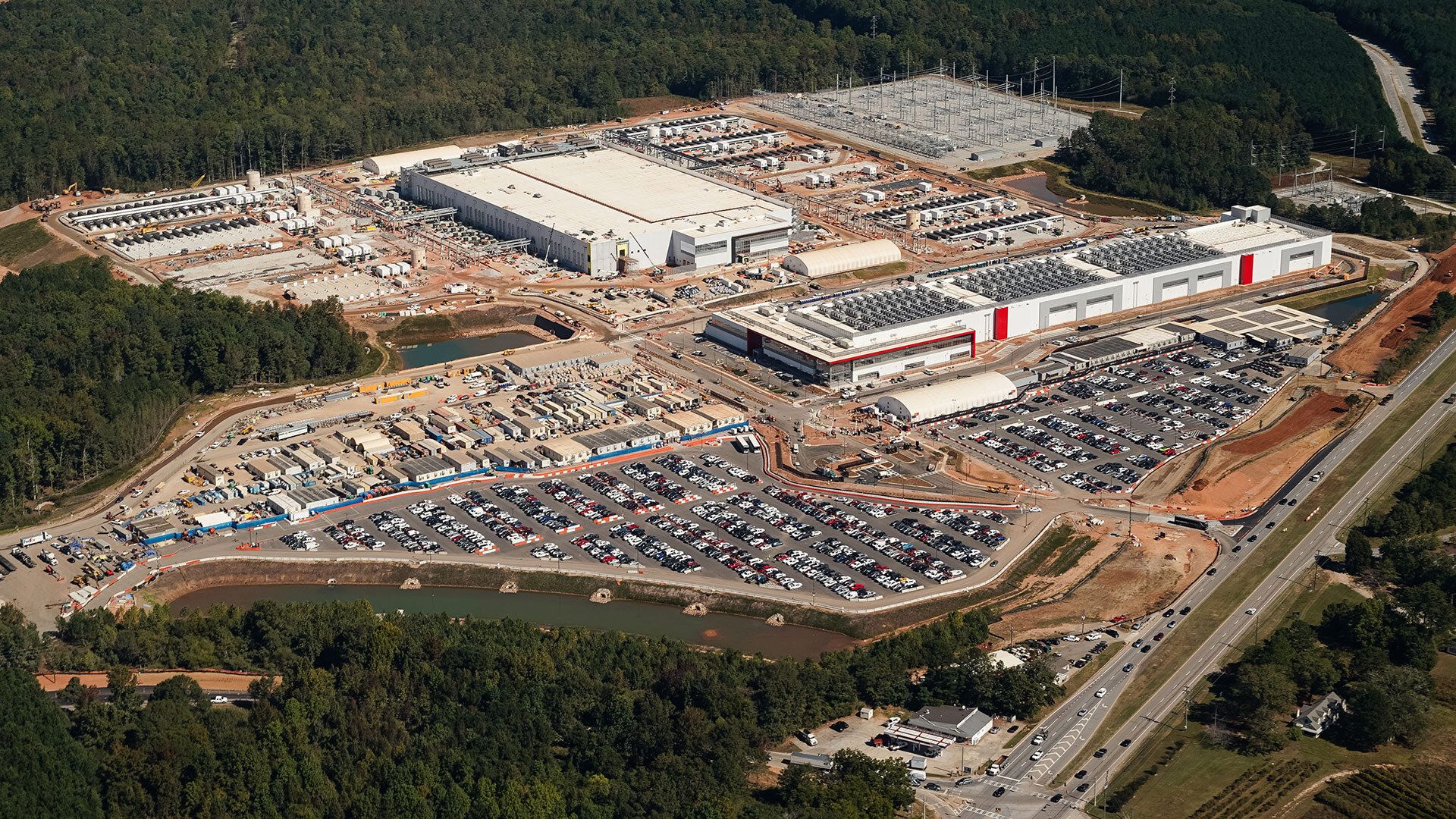
Artificial Intelligence (AI) has captured the world's imagination, powering everything from generative art to complex molecular modeling. However, behind the seamless user interfaces of ChatGPT, Midjourney, and enterprise LLMs lies an uncomfortable physical reality: an astronomical demand for electrical power.
According to a recent forecast by market research firm Gartner, global data center electricity consumption is set to surge by 26% in 2026 alone, reaching a staggering 565 terawatt-hours (TWh), up from 447 TWh in 2025. By 2027, a historic tipping point will occur: AI-optimized servers will consume more power than all conventional data center hardware combined.
To understand the scale of this shift, we need to unpack the engineering, physics, and infrastructure dynamics at play.
The Metrics: Gigawatts (GW) vs. Terawatt-Hours (TWh)
To understand the energy crisis facing tech companies, we must first clarify the difference between how power is rated versus how it is consumed. The industry measures these using two distinct terms:
- Gigawatts (GW): This represents capacity or potential. Think of it as the horsepower of a car engine. It measures how much power the grid must be capable of delivering at any single peak moment.
- Terawatt-Hours (TWh): This represents actual consumption over time. Think of this as the gallons of fuel actually burned during a road trip. One Terawatt-hour is equivalent to 1,000,000 Megawatt-hours (MWh).
To put this in perspective, 1 TWh can power roughly 90,000 homes for an entire year. Gartner forecasts that peak power demand will rise 27% to 132 GW in 2026, while total actual consumption will climb past 1,200 TWh by 2030.

Why Are AI Servers So Resource-Intensive?
Traditional servers rely heavily on Central Processing Units (CPUs). CPUs are designed for general-purpose computing—handling database queries, serving web pages, and managing file storage. They complete tasks sequentially and operate with relatively modest power profiles (typically 100 to 400 watts per processor).
In contrast, AI-optimized servers run on specialized processors like Graphics Processing Units (GPUs) and Tensor Processing Units (TPUs). Deep learning requires performing trillions of matrix multiplications simultaneously. GPUs excel at this parallel processing but require immense electrical currents to keep their millions of tiny transistors switching at high frequencies.
- Thermal Design Power (TDP): A high-end CPU might have a TDP of 250W. A single modern enterprise AI GPU (like the Nvidia H100) has a TDP of 700W to 1,000W.
- Rack Density: Traditional data center racks house equipment drawing around 5 to 15 kilowatts (kW). High-density AI server racks can draw anywhere from 40 kW to over 100 kW per rack.
Power Consumption Breakdown (Historical & Projected)
The shift in power dynamics between traditional architecture and AI-optimized setups is stark, as detailed in the projection matrix below:
| Server & Operational Metric | 2025 | 2026 (Projected) | 2027 (Forecast Tipping Point) | 2030 (Long-Term Forecast) |
|---|---|---|---|---|
| AI-Optimized Server Power | 95 TWh | 175 TWh | 258 TWh | ~600 TWh |
| Conventional Server Power | ~193 TWh | 195 TWh | 200 TWh | ~200 TWh |
| Data Center Cooling Power | ~159 TWh | 195 TWh | Rising | Rising |
| Total Global Consumption | 447 TWh | 565 TWh | ~700+ TWh | >1,200 TWh |
| Global Peak Capacity (GW) | 104 GW | 132 GW | N/A | N/A |
The Cooling Crisis: Dissipating Extreme Heat
When electricity flows through a silicon chip, almost 100% of it is eventually converted into waste heat. This is governed by Joule heating ($P = I^2R$). Because AI server racks pack up to ten times more power into the same physical footprint as traditional servers, they generate massive thermal loads.
Traditional Air Cooling (using fans to push chilled air through the server chassis) is no longer viable for high-density AI clusters. Air simply does not have the heat-carrying capacity required to cool a 100 kW rack.
This has forced data centers to transition to advanced Liquid Cooling systems:
- Direct-to-Chip (Cold Plate) Cooling: Liquid coolant is piped directly to a copper block mounted on top of the GPU, absorbing heat directly from the processor.
- Immersion Cooling: Entire server chassis are submerged in a non-conductive, dielectric fluid that circulates and transfers heat away from the components.
While highly efficient, running these active liquid-cooling loops, chillers, and pumps themselves consumes massive amounts of electricity, accounting for 195 TWh of global usage by 2026.
Grid Constraints and the Geopolitical Struggle
Power grids around the world are not engineered to handle rapid, localized surges in power demand. Building new transmission lines and generating capacity (such as solar farms, wind turbines, or natural gas plants) typically takes anywhere from 5 to 10 years due to environmental assessments, permitting, and construction.
Because the tech industry cannot wait, data center operators are running into major obstacles:
- Project Blocks: In early 2026, over 75 data center projects worth $130 billion were blocked globally due to concerns over local power availability and water consumption (for cooling).
- On-Site Generation: Many operators are installing their own natural gas generators on-site to bypass utility connection queues.
- Local Rate Hikes: In high-density hubs like Northern Virginia (the data center capital of the world), utility companies have struggled to keep up, leading to concerns that local residential electricity rates will spike to fund grid expansions.
Looking Ahead: Gartner's Recommendations
To prevent a total bottleneck by 2030, Gartner's Linglan Wang suggests that infrastructure and operations (I&O) leaders adopt several strategic initiatives:
- Prioritize Power Usage Effectiveness (PUE) Upgrades: Modernizing older data centers with more efficient power delivery systems (minimizing AC-to-DC conversion losses).
- Geographic Diversification (Edge Computing): Moving training workloads (which don't require ultra-low latency) away from crowded municipal grids to remote locations with abundant, stranded green energy (like geothermal power in Iceland or wind power in the Midwest US).
- Invest in SMRs (Small Modular Reactors): Tech giants are increasingly signing power purchase agreements (PPAs) with nuclear energy developers to secure dedicated, zero-emission baseline power.
Without these structural innovations, the AI revolution risk running out of fuel before it can reach its full potential.
Related Posts.

Efficient Patterns for Claude Fable 5: Smart Strategies to Cut AI Costs Without Sacrificing Quality
A comprehensive guide for both beginners and professionals on optimizing the use of Claude Fable 5 and Sonnet 5. Learn how to achieve top-tier AI performance while cutting operational costs by over half using the "Advisor" and "Orchestrator" approaches, complete with easy-to-understand analogies.

Search Console Can Now Track How Your Social and Video Content Performs on Google Search
Google has launched Platform Properties in Search Console, a new way to see how your Instagram, TikTok, X, and YouTube content performs on Google Search and Discover.

Google Maps Demo Key: How to Learn the Google Maps API Without a Credit Card
Want to learn the Google Maps API without a credit card? Meet the Google Maps Demo Key, a new way to get a free API key with no billing account required.