Why AI Agents Are Not Your Coworkers: The Dangerous Myth of 'Digital Colleagues'_

Imagine coming into work tomorrow morning to find a new notification in your company directory: a new team member has been onboarded under your supervision. This "employee" has an email address, a dedicated Slack channel, a profile picture, and a name—let's call him Alex.
But Alex isn't human. Alex is an artificial intelligence tool equipped with agentic workflows. Your HR department, eager to embrace the future, has listed Alex on the company org chart with a specific title: Associate Data Analyst.
How would this framing affect your daily interaction with "him"?
According to groundbreaking research, treating Alex as a "coworker" rather than a software program makes you significantly worse at your job. In fact, anthropomorphizing AI—giving software human traits, names, and organizational roles—is one of the most dangerous trends in modern enterprise technology. It distorts human accountability, degrades critical oversight, and sets up systems for catastrophic failure.
The Psychology of Anthropomorphism: The Cost of "Who's in Charge"
Emma Wiles, a business professor at Boston University, recently conducted a study involving 1,261 managers to observe how human-AI collaboration changes based on how the AI is framed.
The results were startling: people caught 18% fewer errors when the work was presented as coming from an agentic "AI employee" (like Alex) rather than a standard, sterile "chatbot" or database software.
This phenomenon is rooted in a psychological concept known as automation bias (the tendency of humans to trust automated systems blindly) combined with social loafing (the tendency of individuals to put forth less effort when they believe they are working in a team).
+-----------------------------------------------------------------+
|                       THE COGNITIVE SHIFT                       |
+-----------------------------------------------------------------+
|  When Framed as a "Software Tool" (e.g., Chatbot/Parser):       |
|  - Human mindset: "I am the author. This tool is my calculator."|
|  - Vigilance: High (Human double-checks outputs for bugs).      |
+-----------------------------------------------------------------+
|  When Framed as an "AI Employee" (e.g., Digital Colleague):    |
|  - Human mindset: "Alex did this. I am just reviewing his work."|
|  - Vigilance: Low (Human assumes the 'colleague' is competent). |
+-----------------------------------------------------------------+
When we treat AI as an autonomous colleague, we psychologically shift the burden of responsibility away from ourselves. Wiles's study revealed that participants who viewed AI as an employee were 44% more likely to escalate questionable work to a human manager for review rather than taking the initiative to correct the errors themselves.
Instead of saving time—which is the primary selling point of AI integration—this shift creates an administrative bottleneck. Managers are flooded with unverified, AI-generated drafts because intermediate employees no longer feel personally accountable for "Alex's" output.
What Exactly is an "AI Agent" anyway?
To understand why calling an agent a "coworker" is misleading, we must demystify what an AI agent actually is.
Unlike traditional Large Language Models (LLMs) which operate on a simple stateless prompt-and-response model (you ask a question, it generates an answer), an AI Agent is designed to work in an iterative loop to achieve a broader, open-ended goal.
The Core Architecture of an AI Agent:
- Role/Goal Definition: The user sets an objective (e.g., "Find and catalog 50 leads in the cybersecurity sector").
- Planning & Reasoning (ReAct Framework): The agent breaks down the goal into sequential sub-tasks (Reasoning + Acting). It decides what action to take, executes it, observes the result, and plans the next step.
- Tool Integration: The agent is granted access to external APIs, web browsers, databases, and command-line interfaces to execute tasks (e.g., writing code, querying SQL databases, sending emails).
- Memory Systems:
- Short-term memory: Keeps track of the current active workflow context.
- Long-term memory: Stores historical interactions or vector database retrievals to maintain consistency over long periods.
While this multi-step, self-correcting loop makes agentic AI incredibly powerful, it is still fundamentally a complex software program. It has no consciousness, no ethical compass, no legal status, and no actual accountability. Calling it an "employee" is a marketing narrative, not a technical reality.
The Silicon Valley Marketing Hype
Despite the clear risks, tech giants are aggressively pushing the "digital colleague" narrative.
- Nvidia CEO Jensen Huang frequently envisions a future populated by millions of "digital humans" specialized in different organizational roles.
- Microsoft, OpenAI, Anthropic, and Google have launched enterprise frameworks designed around "agentic workflows." Microsoft’s Copilot Studio allows businesses to create virtual agents with defined org-chart roles.
- According to Wiles's research, nearly a third (23%) of surveyed managers say their organizations already list AI tools explicitly on internal company organizational charts.
This branding serves a commercial purpose: it justifies the massive capital expenditure (CAPEX) tech companies have poured into AI infrastructure by presenting these tools as replacements for high-salary human labor.
Traditional Software model:   Utility Tool -> Paid via SaaS Subscription
Agentic "Colleague" model:  Labor Replacement -> Priced based on "Value of Work"
By framing AI as an "employee," software providers can charge premium rates under the guise of selling "labor" rather than "software licenses."
The Danger of Shifting Liability: Moral Scapegoating
When algorithms go wrong, humans instinctively look for someone to blame. If an AI agent is treated like an employee, it becomes an incredibly convenient moral scapegoat.
We saw an early, tragic preview of this dynamic in geopolitical conflicts. When a tragic military drone strike or bombing occurs—such as a strike on a girls' school in Iran—public narratives and investigative reports sometimes drift toward blaming the AI targeting system (like Claude or other custom military models) for "making a bad decision."
In reality, AI systems do not make decisions; they compute probabilities based on human-configured datasets, human-defined parameters, and human-designed triggers. Blaming "the AI" is a convenient way to deflect blame from a cascade of systemic human failures, bad training data, and negligent oversight.
If we let companies list "Alex the AI" on the organizational chart, what happens when Alex leaks customer data, generates legally non-compliant financial projections, or sends a discriminatory email? The company cannot fire Alex. Alex cannot be sued. The responsibility must sit with the human operators who deployed the tool. By humanizing the tool, we blur these clear lines of legal and ethical liability.
Enabling vs. Replacing: A Nobel Laureate's Warning
"AI agents right now are being marketed as things that can replace humans, and I think that's just a losing proposition," warns Daron Acemoglu, an MIT economist and 2024 Nobel Prize winner who studies technology's impact on labor markets.
Acemoglu distinguishes between two types of technological progress:
- So-So Automation (Replacing): Technologies that replace human labor without significantly increasing productivity. Think of automated self-checkout lanes at grocery stores—they don't make grocery shopping faster; they merely shift the labor onto the customer to cut company payroll.
- Enabling Technologies (Empowering): Tools that augment human capabilities, allowing workers to do things they couldn't do before. An example is Computer-Aided Design (CAD) software for architects, which didn't replace architects but allowed them to design far more complex, precise structures.
                      TECHNOLOGY IMPACT SPECTRUM

   [ So-So Automation ] <-----------------------> [ Enabling Technologies ]
   - Goal: Human Replacement                     - Goal: Human Augmentation
   - Example: Automated Customer Support Chatbot  - Example: Diagnostic tool for Doctors
   - Result: Lower quality, shifted burden      - Result: High productivity, better accuracy
Currently, enterprise marketing is heavily focused on So-So Automation—trying to convince executives that they can replace department staff with agentic AI pipelines.
The Disconnect Between Tech Experts and Real Workers
A recent study by researchers at Stanford University highlighted this gap. They surveyed 1,500 workers across 104 different occupations, presenting them with tasks that tech companies claim AI can easily automate.
The researchers found a stark disconnect. Often, the tasks that software developers thought were ripe for automation—like verifying customer credit ratings for sales representatives—were the exact tasks human workers insisted they did not want delegated to AI.
For a sales representative, verifying a credit rating is not just an administrative box to check; it is a critical relationship-building moment where they gauge a client's trustworthiness, negotiate terms, and understand their business context. Outsourcing that task to an AI agent removes the human intuition vital to closing complex business deals.
Conversely, workers did want automation in administrative coordination. For instance, law clerks welcomed AI assistance to track progress and flag deadline bottlenecks across complex litigation files—tasks that require tracking structured data without replacing human legal judgment.
Conclusion: Your AI is a Tool, Not a Teammate
Branding an AI tool as a "coworker" or "digital employee" like Alex does not make it more competent. In fact, it makes the human team members surrounding it less vigilant, less accountable, and ultimately less effective.
If we want to successfully integrate AI into our organizations, we must strip away the anthropomorphic marketing language:
- Do not give AI tools human names or email accounts.
- Do not put AI agents on the company organizational chart.
- Do explicitly define AI as a high-powered software utility.
- Do establish clear human ownership and accountability for every single output generated by an AI tool.
AI is a bicycle for the mind, not a rider. Let's keep the human firmly in the driver's seat.
Related Posts.
Efficient Patterns for Claude Fable 5: Smart Strategies to Cut AI Costs Without Sacrificing Quality
A comprehensive guide for both beginners and professionals on optimizing the use of Claude Fable 5 and Sonnet 5. Learn how to achieve top-tier AI performance while cutting operational costs by over half using the "Advisor" and "Orchestrator" approaches, complete with easy-to-understand analogies.

AI's Insatiable Appetite: Why AI Servers Will Consume More Power Than Traditional Data Centers by 2027
Explore Gartner's forecast on the massive surge in AI data center power demand, why GPUs require so much energy, and how it strains global electrical grids.
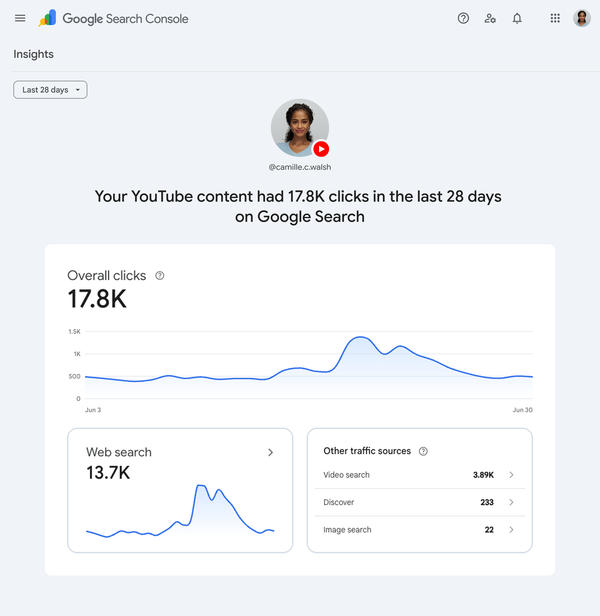
Search Console Can Now Track How Your Social and Video Content Performs on Google Search
Google has launched Platform Properties in Search Console, a new way to see how your Instagram, TikTok, X, and YouTube content performs on Google Search and Discover.