Google's Historical Rewrite: What a Gemini-Assisted Declaration of Independence Says About the AI Marketing Trap_

Two hundred and fifty years after the signing of the Declaration of Independence, tech giant Google has released a provocative new commercial. The premise? What if the Founding Fathers had access to Google Workspace and Gemini AI in 1776?
With the witty tagline “Group project, but make it 1776,” the advertisement depicts a largely unseen Thomas Jefferson mid-draft in his study. The historical solitude is interrupted by a nagging text message from Benjamin Franklin, sparking a highly collaborative, Google-centric revision process. Edits are suggested in Google Docs, brainstorming sessions are scheduled in Google Calendar, and remote meetings are conducted via Google Meet (humorously, with every single attendee turning their camera off). The historic document is finalized with e-signatures, followed by celebratory fireworks.
But this is a tech advertisement in the mid-2020s, which means artificial intelligence is the real star of the show. Here is an in-depth look at the technology showcased, the marketing pivot it represents, and why it has sparked fierce cultural debate.
The AI Tech on Display: Workspace Integration Explained
Google’s commercial is not just a historical parody; it is a showcase for Google’s Gemini for Workspace—an ecosystem of generative AI tools integrated directly into productivity software like Docs, Sheets, and Slides.
In the ad, the fictionalized Founders leverage several specific AI features:
- "Help me visualize" (Generative Media): The Founders use this tool to brainstorm designs for the national seal, testing out different animals (such as a turkey or an eagle). In technical terms, this represents Google's text-to-image diffusion models, which generate high-fidelity graphics from natural language prompts.
- Gemini Meeting Notes (Natural Language Processing): During a frantic Google Meet session, Gemini works in the background to transcribe the conversation, summarize key debates, and assign action items. This is driven by large language models (LLMs) trained to recognize speech, parse context, and extract actionable metadata in real-time.
- Smart Access Control Advice: In one of the ad's funniest moments, the Founders consult Gemini on how to handle a document access request from King George III. The chatbot advises them to "decline" the request—a playful nod to data security and sharing permissions in Google Drive.
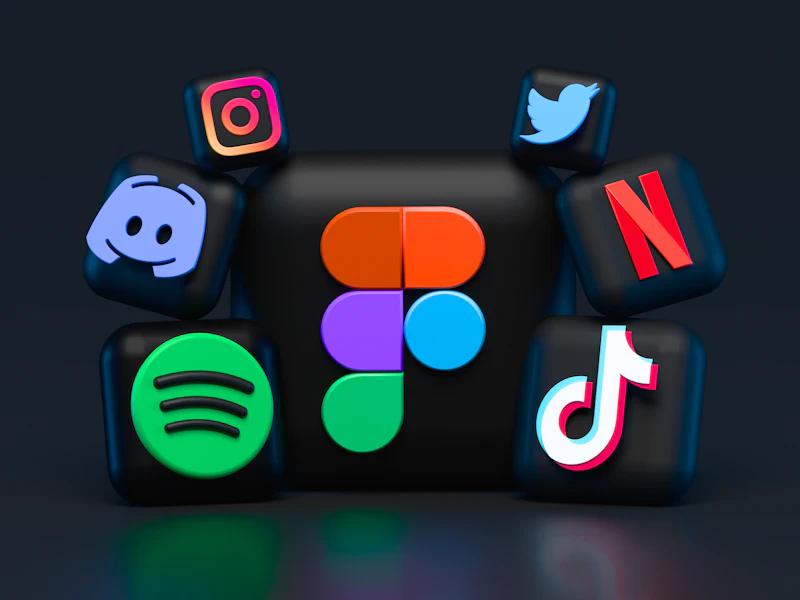
Figure 1: Digital collaboration platforms are increasingly outsourcing administrative and creative tasks to generative AI systems.
The Ghost of "Dear Sydney": A Strategic Marketing Pivot
To understand why this ad is structured the way it is, one must look back at Google’s past marketing missteps—specifically, the infamous "Dear Sydney" commercial.
During the 2024 Paris Olympics, Google aired an ad showing a father using Gemini to write a fan letter on behalf of his young daughter to track star Sydney McLaughlin-Levrone. The backlash was swift and severe. Critics, educators, and consumers argued that outsourcing a child’s genuine emotional expression to an AI algorithm was dystopian, lazy, and stripped away the core of human connection.
In this new 1776 campaign, Google’s marketing team has clearly taken notes. They carefully avoid suggesting that the actual, iconic text of the Declaration of Independence was written by an AI. Instead, Jefferson writes the profound words himself, while Gemini is relegated to menial administrative tasks: scheduling, summarizing meetings, and generating conceptual images for a seal. This positioning attempts to frame AI as a supportive co-pilot rather than a replacement for human intellect and emotional depth.
The "Uncanny Valley" of AI-Generated Video
While the commercial is live-action in style, keen-eyed viewers have pointed out a distinct visual aesthetic. The footage has the unmistakable, slightly artificial glow of modern AI-generated video and neural rendering.
In computer graphics and robotics, this is known as the "Uncanny Valley"—a hypothesis that human replicas which appear almost, but not quite, like real humans elicit feelings of eeriness and revulsion. Modern AI video tools (such as OpenAI's Sora or Google's Veo) utilize diffusion models to construct motion frames. While highly sophisticated, they often produce a hyper-smooth, dreamlike texture where lighting, skin tones, and background physics feel slightly unnatural.
By leveraging this aesthetic, Google subtly showcases its generative video capabilities, even if it adds a surreal, dreamlike atmosphere to 18th-century Philadelphia.
Why Critics and Historians Are Skeptical
Despite positive reactions on mainstream platforms like YouTube and Instagram, the ad faced a cold reception on decentralized platforms like Bluesky. Historians and tech critics have labeled the ad "cringey" and "stunningly tone-deaf."
"Even in a corny fantasy joke, it’s impossible to make the case that AI is a useful tool for political organizing, writing, or human collaboration."
— Angus Johnston, Historian
The core of the critique lies in the philosophy of human collaboration. Writing the Declaration of Independence was a deeply human, messy, and intellectually rigorous process. It involved fierce debate, philosophical alignment, and compromising on language that would define a nation.
By framing this monumental historical event through the lens of corporate productivity software and AI shortcuts, critics argue that Google trivializes the hard work of human intellect. An AI can summarize a meeting, but it cannot understand the existential weight of declaring freedom from an empire.
Conclusion: The Delicate Balance of Selling Productivity
Google's "Group project, but make it 1776" commercial is a fascinating case study in modern tech advertising. It demonstrates how companies are scrambling to make generative AI seem accessible, safe, and helpful in everyday workflows without stepping on the toes of human creativity.
By keeping the actual writing in human hands and delegating the administrative busywork to Gemini, Google managed to avoid the severe backlash of the "Dear Sydney" era. However, as the debate surrounding AI-generated visuals and the outsourcing of human intellect continues to heat up, even a harmless historical parody can quickly become a battleground for the future of human collaboration.
Related Posts.
Efficient Patterns for Claude Fable 5: Smart Strategies to Cut AI Costs Without Sacrificing Quality
A comprehensive guide for both beginners and professionals on optimizing the use of Claude Fable 5 and Sonnet 5. Learn how to achieve top-tier AI performance while cutting operational costs by over half using the "Advisor" and "Orchestrator" approaches, complete with easy-to-understand analogies.

AI's Insatiable Appetite: Why AI Servers Will Consume More Power Than Traditional Data Centers by 2027
Explore Gartner's forecast on the massive surge in AI data center power demand, why GPUs require so much energy, and how it strains global electrical grids.
Search Console Can Now Track How Your Social and Video Content Performs on Google Search
Google has launched Platform Properties in Search Console, a new way to see how your Instagram, TikTok, X, and YouTube content performs on Google Search and Discover.